The Role of Sodium Humate for Talc Depression in Modern Mineral Processing
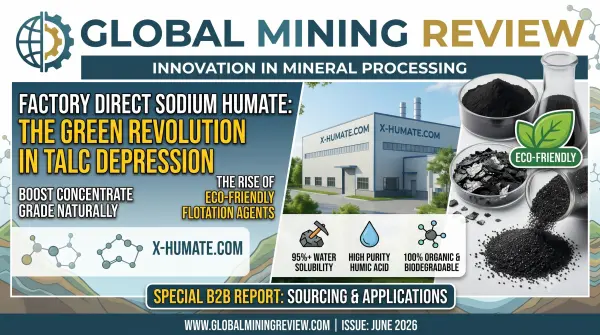

In the highly competitive world of mineral processing, achieving maximum concentrate grade while managing complex gangue minerals is a constant battle. Among these challenges, talc interference stands out as a notorious headache for mill operators. Because of its natural hydrophobicity, talc easily floats along with valuable massive sulfides (like copper, lead, and zinc), severely diluting the final product quality.
Traditionally, operators relied on synthetic polymers or hazardous inorganic chemicals to suppress gangue minerals. However, with tightening global environmental regulations and rising ESG standards, the mining industry is facing a critical transition.
The industry needs a solution that is both highly effective and sustainable. Enter the multi-functional, eco-friendly flotation depressant: Sodium Humate.
Why Sodium Humate for Talc Depression is a Game-Changer
Derived from natural, highly oxidized leonardite or lignite, Sodium Humate is a complex macromolecular organic sodium salt rich in active groups such as carboxyl and phenolic hydroxyl groups. Its unique molecular structure makes it an exceptional agent in the flotation circuit:
-
Selective Adsorption: The hydrophilic groups of Sodium Humate selectively attach to the surface of talc, graphite, or magnesium-bearing silicates. This alters the mineral surface from hydrophobic to highly hydrophilic, effectively keeping the gangue locked in the pulp while allowing target metals to float freely.
-
Flocculation of Slime: Beyond depression, it acts as an efficient dispersant and depressant for fine slime, preventing "slime coating" on valuable mineral surfaces.
-
100% Eco-Friendly: Unlike traditional toxic depressants, Sodium Humate is completely biodegradable and organic. It leaves zero harmful residues in tailing dams, drastically reducing water treatment costs and helping mines meet stringent environmental audits.
Maximize Efficiency with Factory Direct Supply
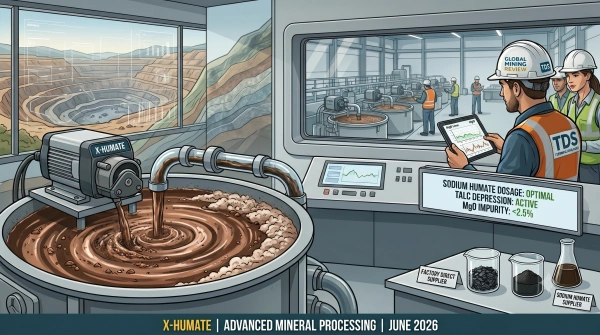
When sourcing mining chemicals, consistency and cost-efficiency are paramount. Partnering with a source that offers factory direct supply sodium humate depressant ensures that your reagents maintain a uniform molecular weight and active group density from batch to batch—critical factors for stabilizing flotation recovery rates. Moreover, buying factory-direct eliminates middlemen, optimizing your reagent cost per ton of ore processed.
If you are looking to lower your MgO or SiO₂ impurities in copper-zinc or graphite flotation without compromising your environmental compliance, it’s time to integrate technical-grade Sodium Humate into your reagent scheme.
| Parameter | Specification |
| Appearance | Black Powder / Shiny Flakes |
| Water Solubility (Dry Basis) | 95.0% |
| Humic Acid (Dry Basis) | 60.0%-65% |
| pH Value | 9.0 - 11.0 |
| Moisture | 15.0% max |
| Mesh Size (Powder) | 80 - 100 mesh |
Commercial & Logistics Information
-
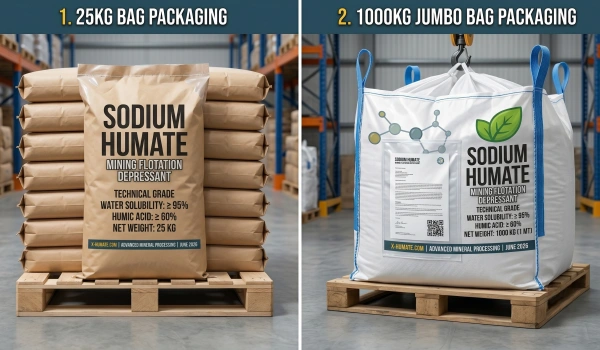
Packaging: 25kg Kraft paper bags with PE inner liner, or 1,000kg Jumbo bags tailored for mining volume.
-
Applications: Specifically optimized as an eco-friendly flotation depressant for talc, graphite, calcite, and silicate gangue minerals.
-
Sample Support: Free samples (200g - 500g) are available upon request for laboratory flotation tests.
Beyond Chemicals: How X-HUMATE is Redefining Agricultural Efficiency with Multi-Functional Calcium Formate
Related Article